Affect labeling is the process of naming an emotional state using one word or phrase.
By naming the emotion or feeling, you move from the emotional center of the brain, the amygdala to the processing part of the brain, the prefrontal cortex.
Just by naming the emotion you are feeling activates the thinking part of your brain and reduces the activity of the amygdala, the part of the brain that regulates the fight or flight response.
The shift in the neural activity in turn reduces the physical effects of stress.
In his 2007 study, Dr. Matthew Lieberman found that by naming the emotion in real time stress is reduced by 50% within 90 seconds.
Lieberman, M. D., Eisenberger, N. I., Crockett, M. J., Tom, S. M., Pfeifer, J. H., & Way, B. M. (2007). Putting feelings into words: Affect labeling disrupts amygdala activity in response to affective stimuli: Research article. Psychological Science, 18(5), 421-428. https://doi.org/10.1111/j.1467-9280.2007.01916.x
Another tool to process difficult experiences is journaling. Dr. James Pennebaker. He found that by writing 15-20 minutes a day about a traumatic event led to changes like: reduced stress, better immune function ,and brain function. By journaling you are forcing your brain to organize raw emotional data into a structured story which changes how the memory is stored.
Essential Elements To achieve the response, the book outlines four basic requirements:
A quiet environment to minimize distractions.
A mental device (such as a repeated word, sound, or prayer) to focus attention.
A passive attitude where you let distracting thoughts pass without judgment.
A comfortable posture.
How to Practice:
Find a quiet place: Sit in a comfortable position without any distractions.
Close your eyes: Let your body settle and soften your gaze.
Relax your muscles: Release tension starting from your feet and move slowly up toward your face.
Breathe through your nose: Focus on your natural breathing pattern.
Repeat a focus word: Say the word “one” silently to yourself every time you breathe out. You can also use a peaceful word or short phrase like “peace” or “all is well”.
Maintain a passive attitude: When your mind wanders—which is completely normal—gently let go of the distracting thoughts and return your focus to the word “one”.
Time your session: Continue for 10 to 20 minutes. Do not use an alarm; you may open your eyes to check the clock.
Finish slowly: Sit quietly for a few minutes with your eyes closed, then open them before returning to your regular activity
Physical Benefits
Lower Blood Pressure: Slows breathing and heart rate to reduce hypertension.
Reduced Oxygen Consumption: Decreases metabolic activity and muscle tension.
It’s no secret that first responders get a rush of adrenaline while responding to scenes. It’s stems from our fight or flight response and helps us stay safe.
What happens if your nervous system gets stuck in that mode? Panic attacks or anxiety can set in. It is a very uncomfortable feeling. Grounding exercises can help us get from the panic stage back to a normal state by helping our minds calm down into the present nonthreatening moment.
There are a variety of exercises. One of the most common is the 5-4-3-2-1
5 Things you can see
4 Things you can feel
3 Things you can hear
2 Things you can smell
1 Thing you can taste
By the time you get to the one thing you can taste you my and body are “grounded” in the present non-threatening reality that you are safe.
You can read about other exercises on the following links. Find the one that works for you, practice it and eventually it will become second nature when you feel anxiety come on.
Brain scans show these 6 sentences reduce anxiety activity in seconds:
I’m feeling _______
Naming the emotion physically calms your brain Lieberman’s UCLA FMRI study (2007) showed labeling feelings reduces the amygdala activity and lights up the prefrontal cortex, the part responsible for regulation.
Name the feeling and the study showed a 50% reduction of the intensity of the emotion within 90 seconds
“[Your name], you’re going to be ok.”
Talking to yourself in the third person creates emotional distance
Ethan Kross’s brain imaging research at eh University of Michigan (2017) found this drops neural markers of emotional reactivity, without using extra mental effort
It gives your brain instant access to the calmer part of itself.
“This is uncomfortable, not dangerous.”
Reframing sensation as safe is called cognitive reappraisalOchsner and Gross’s fMRI research at Columbia shows it directly lowers amygdala activity and strengthens
prefrontal
control
This is the exact mechanism behind Cognitive Behavior Therapy, the most researched anxiety treatment in the world
“This will pass.”
Reminding yourself the intensity is temporary is called temporal distancing
Bruehlman-Senecal & Ayduk’s 2015 study (Journal of Personality and social Psychology) found this along significantly reduces emotional distress in the moment.
Your brain calms faster when it remembers the wave is ending
“I’ve felt this before. My body came down.”
Recalling past evidence of safety updates your brain‘s threat prediction
This is the same process used in exposure therapy to help brains unlearn fear responses.
Every time you remember surviving it, the alarm gets a little quieter
From @health_anxiety on Instagram by Taylor Barone, MS,RDN
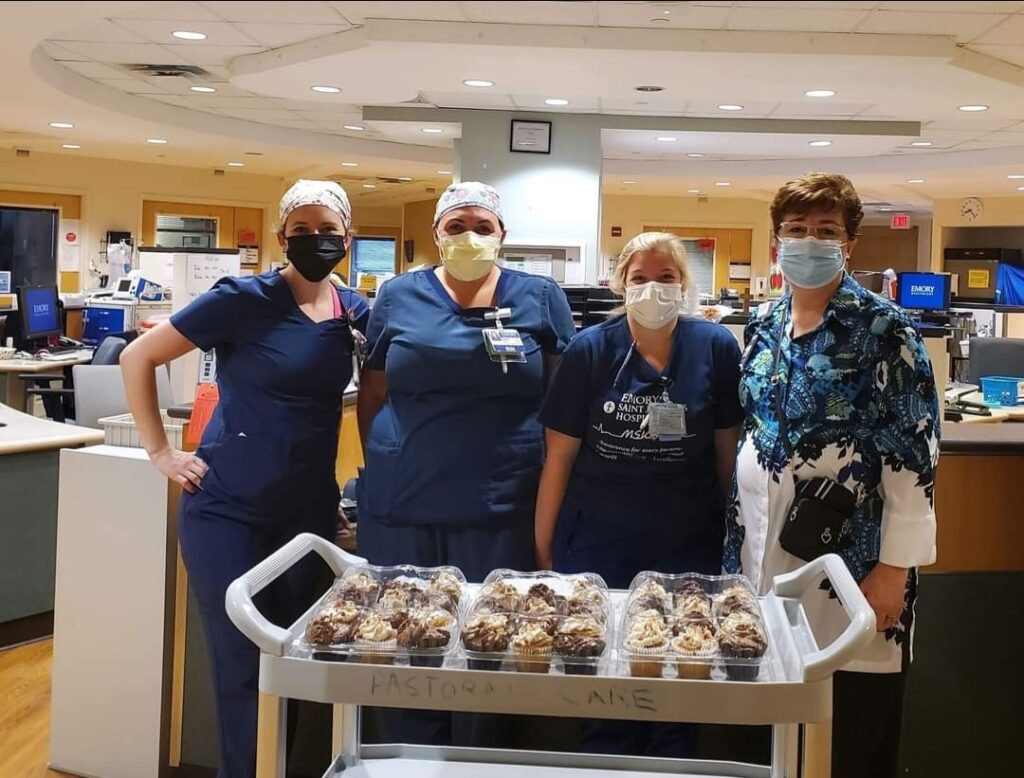
The bakery, I Canita Cake, in Roswell donates bakery goodies for first responders. I get the chance to bring them to the hospital on occasion.
A year ago on December 14, 2020 I began as a Registry Chaplain at a major hospital in the Atlanta area. Like so many families in 2020 our income was suddenly stopped. Both my husband and I do freelance work most of which relies on face-to face meetings. My husband is a photographer and I do project work in the nonprofit sector. When face-to-face gatherings suddenly ended in 2020, I was faced with finding another source of income. Hospital chaplaincy appeared to be my best option and one I’ve felt called to for years.
I applied to every opening in the greater Atlanta area. By October of 2020 I began to schedule interviews with three different major hospital systems. In November I was hired as a Registry Chaplain, which is PRN (as needed) work. As it turns out I am working 20-30 hours a week regularly, very good for PRN work.
The past year has been a whirlwind. In some ways it has passed quickly, but in others I feel like I’ve aged years. At the hospital where I work chaplains handle the decedent paperwork in addition to being a caring presence for the families of the deceased. This means we give the medical staff the death certificate worksheet to complete, make initial calls to both Lifelink and on occasion the Medical Examiner. We also are the main contact for the families when they decide on a funeral home. When a patient is near death a chaplain is often called to be with the patient and their family. The total time with the patient and family and then to complete the paperwork can vary between 2 – 4 hours before during and after a death to the completion of the paperwork.
Since December of 2020 as a part-time chaplain I’ve handled the decedent paperwork for 76 patients. At my one year anniversary I was curious how many people I had handled this for in less than 120 days of work, so I went through our log book and counted. I needed to see the proof as to why I felt so heavy.
Early on in my time at the hospital I was trying to get as may hours as I could in an effort to make up some lost ground in our household income. All was going well until somewhere in mid-February I hit a major wall. I felt awful and was thoroughly checked out medically. I realized I felt awful because of the shear numbers of dead and dying patients and their families I had met with in a few short months. In one 12 hour shift in January of 2021 I had 6 deaths. In that 12 hour period I had no time for even a sip of water or a bite of food. It was at this time I learned to take breaks as I could. Often taking quick breaks to eat a protein bar or drink water. I no longer packed my schedule.
The need for self-care is not optional in this work. Writing about the things I’ve learned is one way for me to take care of myself. My hope is that my reflections will help others who find themselves in this reflection and take time for self-care.
A few random things I’ve learned in the past year in not particular order:
Our healthcare workers are true heroes.
I watched the medical staff in more Code Blue situations than I can count. It is an amazing situation to watch. Scores of people descend on a room and each knows their role, and what is expected of them. This is team work in literal life and death situations. I am left in awe each time I report to a code.
I was surprised to find over the past year the number of nurses, doctors, physician assistants and nurse practitioners who will tell us, the chaplains, they couldn’t do our job.
Related to the point above, healthcare and the fire service is similar. At a fire scene as chaplain I go to the family to comfort them as they watch smoke and flames billow out of their home. The firefighters tell me they couldn’t do what I do, but they walk into the flames. I cannot do what the firefighters do nor what the nurses at the hospital do. We each have our role to play and are highly trained to do it.
Nothing will frustrate an ICU or CCU medical team more than a family who will go against the patients wishes and not make them DNR (do not resuscitate). The medical team knows that at a certain point keeping a person’s heart beating does not mean they will get better and go home. Many times it just prolongs the suffering of the patient. It is far more compassionate to let a natural death to occur. See THIS article about doctors and end of life care.
Another frustrating thing for medical workers is the spreading of false information and conspiracy theories. Just don’t do it. People are losing their lives because they are not vaccinated.
Medical staff is often left with many questions when a family who professes a faith in God, and the belief that life does not end, but that a faithful person will live on with God, prevents their loved one from that hopeful death.
In the midst of some really awful days, sharing a photo of a new baby or puppy can really brighten the moment.
The funeral homes and their transportation people are also feeling the stress from the pandemic. Did you know there is a whole business just to pick up deceased patients and take them to the preferred funeral home? While the pandemic may be good for these businesses the people who work for these businesses are feeling the strain too.
Hospital staff appreciate people in the community sending in treats. Hearing thank you helps.
Hospital administration, at least at our hospital, work very hard at finding ways in which to support the staff. Their work is a different type of tough with it’s own set of stressors.
Humor is a great stress reliever. I learned that when my oldest son was to be commissioned in the Army then again before his deployment to Afghanistan. I took a comedy writing class before each of those events. The lessons learned in those classes has seen me through some difficult experiences since. You can see the graduation videos Here and Here.
I work with some amazing people in the pastoral care office. It is so refreshing, and rare, to work with a team of professionals who support each other.
The role of a chaplain is misunderstood by many. A hospital chaplain is trained to listen, be present and help people access their own means of support. We are a caring presence for people at some of the toughest times of their lives. At the core of being a chaplain is being present for people going through a tough time. We can’t change what is happening but we can let a person know they are not alone at a time they may feel completely deserted.
I am sure I’ll think of other lessons from the past year, but for now these are the ones I’ve had on my mind. As we battle the latest variant of the virus and continue to battle misinformation, I’m sure I’ll feel the need to write again.
A few photos follow of some pretty neat things that happened the past year.
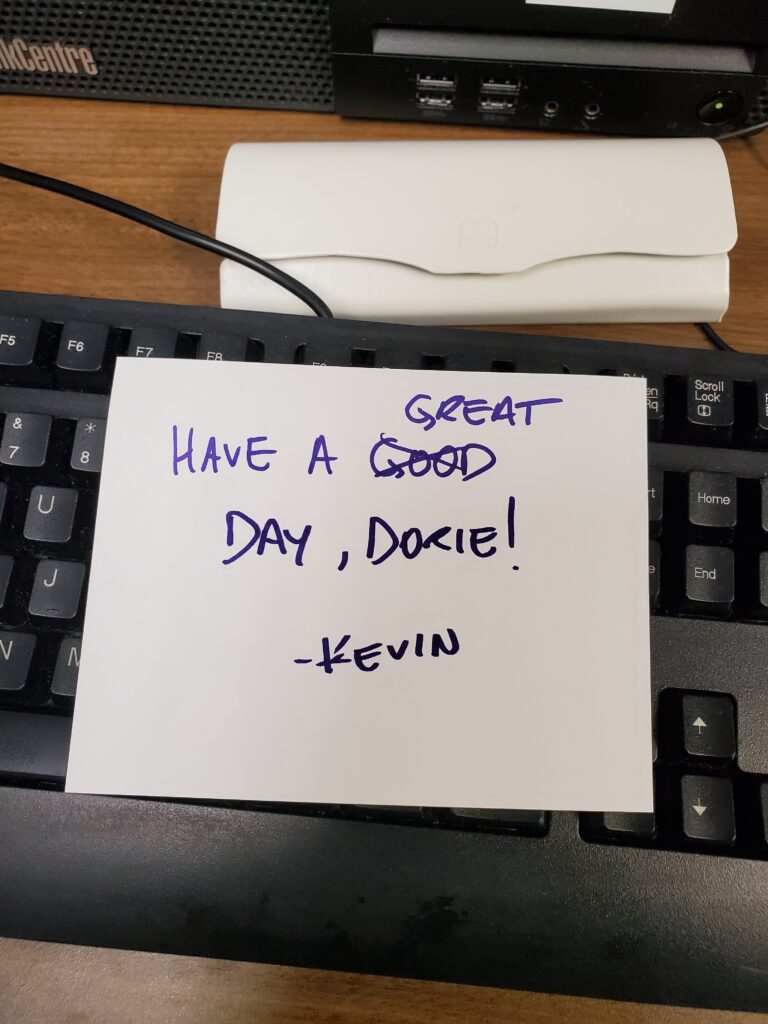
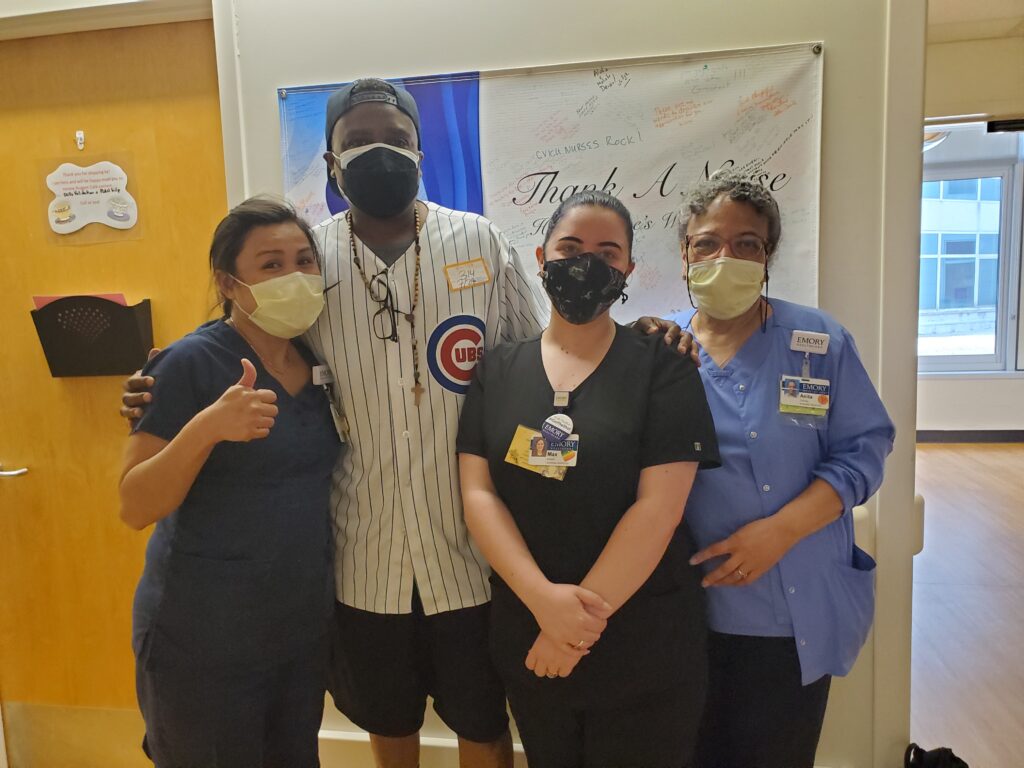
A fun note from a co-worker starts the morning off right’When a young patient told me he loves HBCU marching bands and the movie Drumline, I enlisted the help of my friends at the Chick-fil-A Peach Bowl. They put me in touch with Kelly Fanning, VP of Marching Bands for the Bowl (pictured on the left). Kelly then put me in touch with the directors of several HBCU marching bands who each sent T-shirts, lanyards, and hats to our patient. Then Kelly and his friend Geoffrey Thompson (pictured on the right) visited. (See the video HERE. ) Both Kelly and Geoff had a role in the movie Drumline. Geoff then asked his friend actor, Jason Weaver (pictured in the middle), to visit the patient. Jason played Ernest in the movie Drumline. To say our patient was speechless is an understatement.
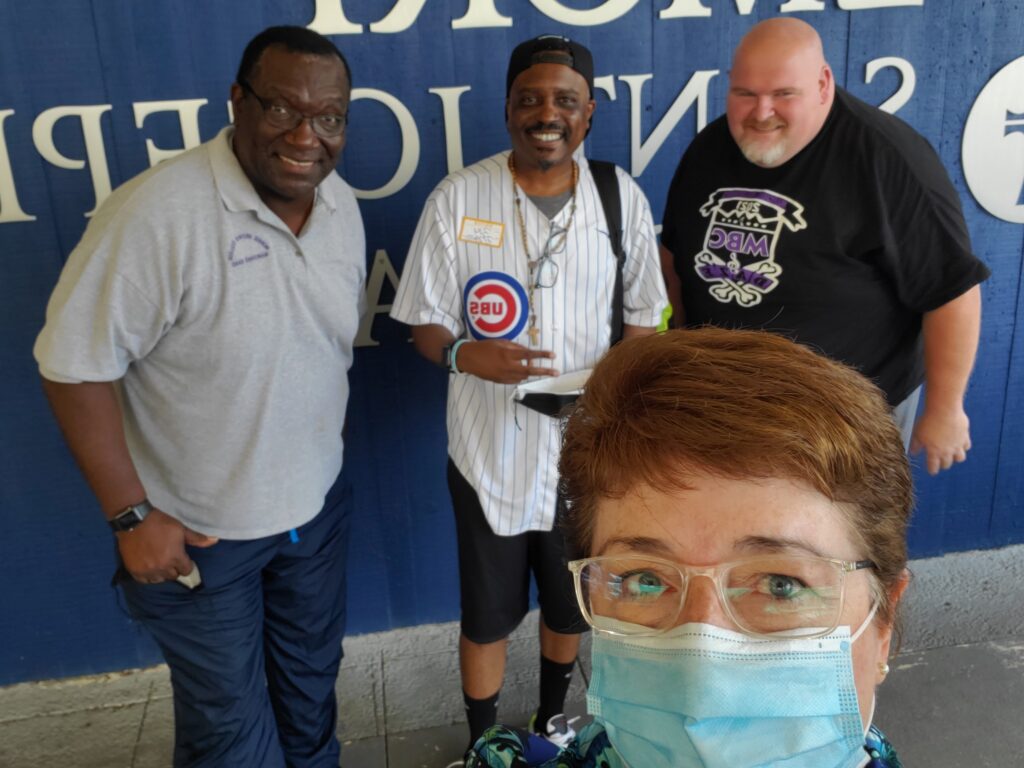
Jason Weaver took extra time to visit with some of my work family, Tiffany, Max and Anita.
The ancient Latin saying, ” Praemonitus, praemunitus,” later in 16th century England became “Forewarned is forearmed” can apply to a wide variety of situations. For this post I’ll be discussing the importance for first responders to learn about the potential dangers of their work to their mental health.
Before I begin it is important to note that each individual will process their experiences differently. Not everyone who is exposed to a traumatic event will end up with a traumatic stress related injury. Advance knowledge of Post Traumatic Stress Disorder (PTSD) and related disorders can help first responders help themselves and their co-workers.
Post Traumatic Stress Disorder (PTSD) is fully explained on the website of the National Institutes of Mental Health. I encourage all first responders to read the information on their site.
For the purpose of this entry I share the criteria the NIMH list on their site for a diagnosis of PTSD below. In the last paragraph the BOLD type was added by me for emphasis:
“To be diagnosed with PTSD, an adult must have all of the following for at least 1 month:
At least one re-experiencing symptom
At least one avoidance symptom
At least two arousal and reactivity symptoms
At least two cognition and mood symptoms
Re-experiencing symptoms include:
Flashbacks—reliving the trauma over and over, including physical symptoms like a racing heart or sweating
Bad dreams
Frightening thoughts
Re-experiencing symptoms may cause problems in a person’s everyday routine. The symptoms can start from the person’s own thoughts and feelings. Words, objects, or situations that are reminders of the event can also trigger re-experiencing symptoms.
Avoidance symptoms include:
Staying away from places, events, or objects that are reminders of the traumatic experience
Avoiding thoughts or feelings related to the traumatic event
Things that remind a person of the traumatic event can trigger avoidance symptoms. These symptoms may cause a person to change his or her personal routine. For example, after a bad car accident, a person who usually drives may avoid driving or riding in a car.
Arousal and reactivity symptoms include:
Being easily startled
Feeling tense or “on edge”
Having difficulty sleeping
Having angry outbursts
Arousal symptoms are usually constant, instead of being triggered by things that remind one of the traumatic events. These symptoms can make the person feel stressed and angry. They may make it hard to do daily tasks, such as sleeping, eating, or concentrating.
Cognition and mood symptoms include:
Trouble remembering key features of the traumatic event
Negative thoughts about oneself or the world
Distorted feelings like guilt or blame
Loss of interest in enjoyable activities
Cognition and mood symptoms can begin or worsen after the traumatic event, but are not due to injury or substance use. These symptoms can make the person feel alienated or detached from friends or family members.”
It is natural to have some of these symptoms for a few weeks after a dangerous event. When the symptoms last more than a month, seriously affect one’s ability to function, and are not due to substance use, medical illness, or anything except the event itself, they might be PTSD. Some people with PTSD don’t show any symptoms for weeks or months. PTSD is often accompanied by depression, substance abuse, or one or more of the other anxiety disorders.“
I added the bold type above to emphasize the fact that feeling off or experiencing any of the reactions listed above immediately after a traumatic event is normal. The phrase often used is, “It is normal to feel abnormal .” If the reactions do not lessen after a month or so, that is a sign to seek additional support from a therapist or doctor.
First responders, like service members, often hesitate asking for help. No one wants to be taken off of active duty, or to say they are struggling. Fortunately in the military great strides are being made in de-stigmatizing asking for and seeking help. Due to increased awareness of suicide rates among first responders, steps are now being taken by public safety administrators to increase peer support programs and enhance employee assistance programs. More work need to be done in this area.
Administrators of public safety departments need to lead in the realm of education on mental healthcare for their department.
A view behind The Wreck in Charleston, SC. a peaceful scene in the midst of turmoil.
First responders deal with tragedies on a daily basis, and they must develop a level of emotional distance from the events to be professional. Although distance is a helpful coping mechanism in the short term, long term it can be harmful to the individual. Becoming emotionally distant from unfolding situations can cut off the grieving process.
We can grieve over any change, tragic or personal, it doesn’t just happen when someone dies. Changes in our daily routine, the loss of a friendship, the loss of what we thought was going to happen and suddenly cannot. Right now most of us are going through some sort of change to what was our “normal” way of life because of COVID-19 restrictions. We can name some of those uneasy feelings as grief.
Grief is an emotion many of us try to avoid or minimize. Grieving is not comfortable, so we try to move on quickly to more pleasant emotions. The truth is — we need to grieve as the emotion hits us. If we suppress the grief, other aspects of our lives can be affected.
Constant suppression of grief can lead to emotional distance in other relationships, physical symptoms of depression, as well as other physical ailments. Erich Fromm wrote, “To spare oneself from grief at all costs can be achieved only at the price of total detachment, which excludes the ability to experience happiness.”
Certainly, a level of detachment is necessary when exposed to tragic or emotional events, but complete detachment from any pain or hurt is not desirable. It can lead to larger problems, physically and mentally. Naming the loss of activities and events as grief can help you move forward.
If you are grieving a loss of events, a person, after a tragic event:
Keep a personal journal of your feelings. Write about what you miss whether it is a person or event.
Find a friend or group of friends to talk to regularly and share your experiences.
Seek out a professional counselor/therapist who can help you move through the grief experience.
Give yourself permission to feel the emotion.
Consult one of the many resources available on grief.
It’s normal to be upset and feel down after a time of loss or tragedy. It can take up to five years to fully process the death of a loved one. We never “get over” the feeling of loss, but we do reach a point where the grief isn’t all consuming.
Grieving is a normal emotion. It is normal to feel lonely, cry and question the meaning of life. But, if you are experiencing lingering problems at work and/or at home, you may be experiencing depression.
Signs of depression include: a change in weight, difficulty sleeping, or a general sense of helplessness. Depression is treatable, but you must see a doctor.
During a time of loss and grief, treat yourself well. Don’t set unrealistic personal goals. Take time for yourself: Take a walk, work out, treat yourself to something that brings you joy, play a game of basketball, rent a funny movie, take a drive.
Remember, the people you care about want to help you through this time. Let them know how they can help. Above all, take care of yourself.
**Part of this article originally appeared in the Southern Newspaper Publishers Association Newsletter in 2004
Disclaimer: This website is for information purposes only. By providing the information contained herein we are not diagnosing, treating, curing, mitigating, or preventing any type of disease or medical condition. Before beginning any type of natural, integrative or conventional treatment regimen, it is advisable to seek the advice of a licensed healthcare professional.
The old dock behind the old boathouse on the campus of The Citadel, in Charleston, SC. My favorite spot on campus. I have a copy of this tranquil place by my desk.
We seem to be stuck in some strange combination of the movies Pandemic and Ground Hog Day. If you are like me, days of the week don’t mean anything any more. While I like my quiet time, I am really ready to get out and be social again.
I know quite a few people who are feeling very unsettled with what has become our new normal in the time of COVID-19 self-isolation. There are very good reasons to feel anxious and stressed right now. My friends and family in New Jersey have many friends who are very ill or who have died. Our news and social media feeds are filled with updates on confirmed cases and death tolls.
There was a time in my life where I experienced a lot of loss and change in a very short period of time. I began to show signs of heart trouble. My left arm would go numb and I had chest pains. After being thoroughly checked out by a cardiologist, the determination was I was experiencing a stress reaction to the events in my life. I began my quest to learn all I could about stress, anxiety and the affect on our bodies. If you find it hard to get out of a loop of worry and anxiety I am going to share a few coping strategies I learned that you may find helpful.
Our minds are amazing things. Our thoughts are very powerful. Have you ever had someone describe the taste of a lemon? The thought of the very sour taste of a lemon can lead you to pucker your lips. Have you noticed that after watching a commercial about a certain food or beverage you suddenly have a craving for that food or drink? You end up with a physical craving for something that started with your thoughts.
When we hold a concern or a worry in our mind we often experience a physical reaction. Unfortunately most of us do this and aren’t aware of where we are holding stress in our body. We go from one activity to another holding a worry in our mind and having a physical reaction in our body that we just ignore. For me I held a lot of stress in my gut, but also in my shoulders. To combat this stress I had to become more aware of when I felt it. Like many people, I would worry or get upset about things I had absolutely no control over. I had to slowly learn to control what I could and let go of what I couldn’t. I called this state of being stressed my “What if” side of my brain. My self dialogue would go something like this:
“What if my husband gets that job in Texas he is looking at? We would have to move. The kids would have to change schools. Will I fit in there? What if I can’t find a job?”
I would get worked up over something that may or may not happen. As it turned out my husband didn’t apply for the position. That was a lot of emotional energy spent on something that never happened. Most of our worries are that way. We get worked up over something that we have little control over.
So how to you live with ambiguity? Learn to live more in the moment and not in the “What if” side of your brain. Using a grounding exercise can help you learn how to live in the present. The following exercises help you get from the abstract “what if” the present situation using your senses to bring you into the present moment. So much of our anxiety and stress comes from how we think of something. Slowing down those abstract thoughts with concrete tactile exercises helps us realize we are actually OK.
A popular grounding exercise is the 54321 grounding exercise. You can find several methods online. The exercise involves using your 5 senses. The Mayo Clinic Health System website suggests the following method. Visit their website for additional tips:
Everyone feels anxious now and then. But there are things you can do to minimize those feelings. Mayo Clinic Health System staff suggest trying the exercise below the next time your mind is stuck on the worry setting.
Sit quietly. Look around you and notice:
5 things you can see: Your hands, the sky, a plant on your colleague’s desk.
4 things you can physically feel: Your feet on the ground, a ball, your friend’s hand.
3 things you can hear: The wind blowing, children’s laughter, your breath.
2 things you can smell: Fresh-cut grass, coffee, soap.
1 thing you can taste: A mint, gum, the fresh air.
This exercise helps you shift your focus to your surroundings in the present moment and away from what is causing you to feel anxious. It can help interrupt unhealthy thought patterns.
See the blog post, “Stress Relief: The four A’s” by Alan Conway, MD for another helpful list of ideas to help you ease and reduce stress.
Most stress relief and anxiety relief methods involve being present in the moment. In moments of stress really helps me to take a quick safety inventory. I ask these questions, Am I physically safe? Am I getting the nutrition I need? Am I getting the sleep I need?If the answer is no to any of these questions, that is what needs to be addressed in the moment.
Some simple things you can do in your work space whether it is at home or at an office:
If possible listen to calming music. My current favorite is Bach for the Brain!
Listening to the sound of water, like a fountain, river, ocean are shown to have a calming affect. If you don’t have natural water running near you, taking a shower can be helpful. To see this calming affect in action watch small children by an outdoor fountain. They are naturally drawn to them while their parents would walk right by.
Unless you are required to wear one, take off your watch. We often stress ourselves over the passage of time. If you want to know the time our phones, computers, and office space usually have clock functions. Glancing at your wrist every few minutes is not helpful. (I stopped wearing a watch in my early thirties.)
If sleep is hard for you, try keeping a journal. Each night before you go to bed, take out your notebook and write down everything you are thinking about. If you find you are caught in the same thought “loop” and can’t move on, write down what you are thinking about in detail. There is great relief in writing down your worries then tearing up the paper and throwing it away. If you have a safe way to do it going outside and burning the paper offers another great release. In the past I’ve had to do that a few times before my thoughts would no longer linger on a negative topic.
Physical exercise is a great release of tension. It can be as simple as talking a walk, outside if possible. Being outside in the sun is also very therapeutic. There is a very helpful organization called Yoga for First Responders. Yoga can help you physically and mentally. Practicing yoga can also help you sleep better.
Social nutrition is a term I learned from Dr. Jonathan Shay, a renown scholar and mental health practitioner. We were attending a conference and I heard him explain how one heals from a traumatic event is determined by the social nutrition a person has around them. He went on to say if a soldier has a mortar wound a big factor in healing that would is the nutrition that person takes into their body. He continued by saying when a person has a psychological wound a big factor in their healing is the social nutrition they have around them. Do they have a supportive family? A group of friend they can talk to? When we talk about our stressors it actually helps us heal the wounds, like intrusive thoughts, that we carry.
I hope you find this information helpful. If I may be of service to you or your organization by leading a workshop/didactic on stress relief, compassion fatigue, or self-care, please send an email to dorie (at) dorielgriggs (dot) com
Gift From Within webcasts and resources on a variety of related issues.
Disclaimer: This website is for information purposes only. By providing the information contained herein we are not diagnosing, treating, curing, mitigating, or preventing any type of disease or medical condition. Before beginning any type of natural, integrative or conventional treatment regimen, it is advisable to seek the advice of a licensed healthcare professional.
This past week The Citadel Foundation (TCF) launched a campaign for seniors to give back $20.17. The goal is to raise $2,017 with 100% participation. Parents can also donate in honor of their cadet as well! In addition, the TCF will be adding a gift match by a generous donor in the near future but that won’t happen until next week.
It would be amazing to announce that this is the first time in history The Citadel Foundation has had a current cadet class at 100% participation! The link to the page is:
The members of the Cadet Philanthropy Council choose their priorities which are The Citadel Fund, Academic Endowment, Cadet Activities, and the Cadet Relief Fund.
***2/10/2019 Please note: I am no longer updating the blog posts for Citadel parents. See the official school website for the most up to date information***
UPDATED 03/16/2017
The Citadel is combining two big events for cadets the weekend of March 17 – 19, Corps Day and Recognition Day. The school website mentions three events which includes the Leadership Symposium. Since most families who come to town do so to see the Summerall Guards ceremony on Saturday morning, and this year for Recognition Day, I’ll focus on those two events.
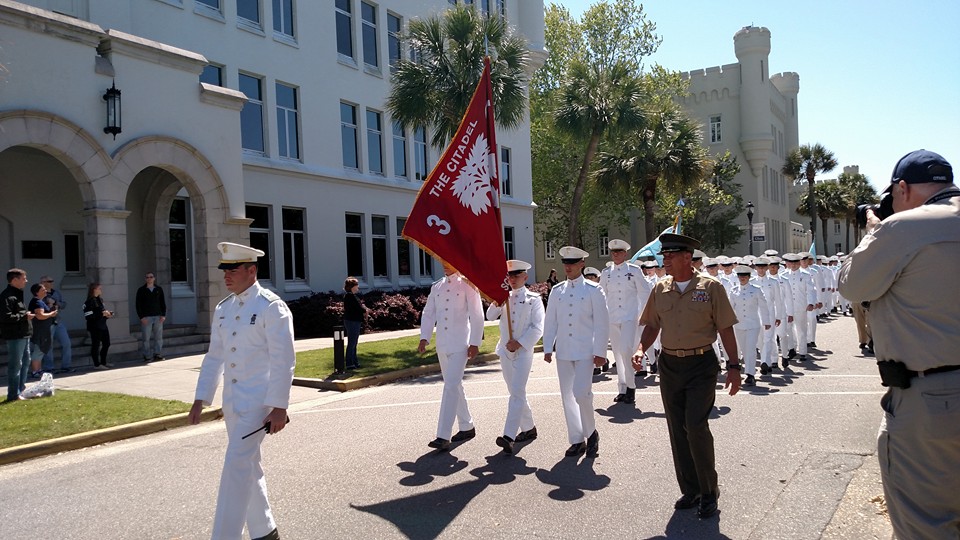
the 2015 Bond Volunteers prepare to take their rifles and become the 2015 Summerall Guards.
Tips for parents of Bond Volunteers and Summerall Guards:
The crowd begins to form on the parade field about 30 minutes before the scheduled ceremony. The schedule lists the time as 8:45 – 9:45am. So arriving by 8:15am to find your preferred spot along the roped off area is a good idea.
Be sure to ask your cadet where they will be as they march onto the field to know if you should be on the side closest to the barracks or the other side closer to Chapel side of the field. For instance my son was the 5th squad back on the end closest to the barracks side of the field. We stood at the roped off area closest to the 2nd battalion across the walk way from where General and Mrs. Rosa sit for parades. (Of course cadets and grads will refer to theses areas and line up for the Summerall Guards by their proper terms. Since I’m a mom and not a grad I’ve developed my own way to describe the areas to help other parents know where to stand.)
After the rifle exchange I was able to get this photo of Cadet Daniel Smith and Cadet Jason Wells. The rifle Jason is holding was once carried by my son. Daniel’s father is also in the photo.
The 2014 Summerall Guards look on as the 2015 Summerall Guards perform for the first time.
The 2015 Summerall Guards during their first performance of The Citadel Series.
Another must is insect repellant for the morning. The entire ceremony only lasts about 20 minutes or so but after it is over you’ll want to snap photos with your cadet. It is a bit of a scramble after it ends. Ask your cadet the best way to find them after the ceremony ends. Many of them will be talking with the Summerall Guard whose rifle they now carry and receiving their Summerall Guard patch.
Most years they’ve had a luncheon for the Summerall Guards after the parade. It is at the luncheon where we purchased out Summerall Guards parent t-shirt. It is a fundraiser for them to help with expenses. Check with your cadet for the plans for this year.
Members of the Class of 2019 begin their march to Marion Square on Recognition Day for the Class of 2019.
Tips for parents of the Class of 2020:
The schedule this year is completely different from previous years since Recognition Day has been moved from April to the same weekend as Corps Day. Stories from parents of upperclass cadets of what they did on Recognition Day won’t really apply to your experience this year.
This weekend is not like Parents Weekend where the emphasis is on spending time together. The Recognition Day part of the weekend is really about the Class of 2020 and their time together, parents while welcome to watch are not the focus. If you are planning to be in town, remember you may not see your cadet Friday afternoon and evening. They have meetings and will need to get their rooms in inspection order for the open barracks Saturday morning. If they do have time off to see you for dinner consider it a bonus visit.
Saturday will be jam-packed with activities. Wear comfortable clothes and shoes for the day. Look over the schedule to see just how busy you’ll be and make your plans for lunch based on your family.
The barracks open at 8:00am. Check with your son or daughter to see if they want any food brought to them. They will have a VERY strenuous workout after the parade so they may not want anything too heavy.
The Rifle Legion and the Summerall Guards will perform on the parade field that morning. Check with your cadet to see if they will be attending both or either of those events. My son’s senior mentor was a Summerall Guard so he wanted to see that ceremony.
After the Summerall Guards exchange rifles the Corps of Cadets must prepare for the 10:00 parade. This would be a good time to have a light snack. The Canteen will be open but to avoid lines you may want to pack your own snacks or lunch. You’ll also have time after the parade and before the Gauntlet begins to grab something to eat or sit in the reception room in Mark Clark Hall between events.
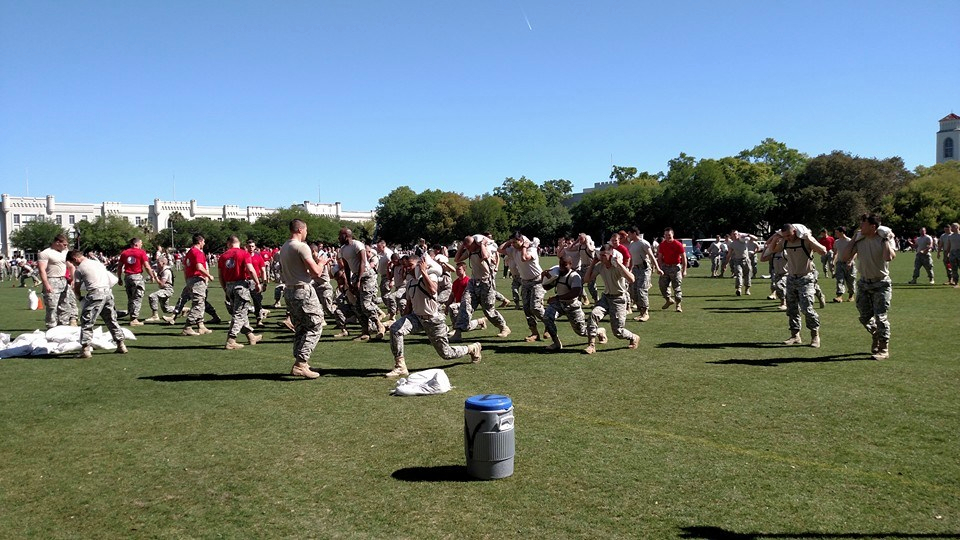
Members of the Class of 2019 participate in the gauntlet as upperclass cadets guide the activities.
The Gauntlet begins at 11:30. It is a series of physical challenges the 4th Class cadets go through together by company. They will be either on the parade field or the WLI field. Some years the school posts a map. I haven’t seen it posted yet. To get an idea of how Recognition Day was handled in the past I’ve found the PowerPoint from 2015 on the website.
The past several years after the gauntlet is over and the 4th class cadets are in the barracks and hear the announcement “The 4th Class System is no longer in effect.” The newly recognized cadets would come out to give a hug to their family members. The timing is very tight this year and the cadets may not have time to come out. The training schedule has the cookout in the barracks beginning at 1320 and the hygiene time to get ready for the retaking of the oath on the parade ground at 3:00. The March is on the schedule for 1500.
If you haven’t ordered a meal through the school (the ordering time frame has past), pack a lunch or eat in the Canteen the school.
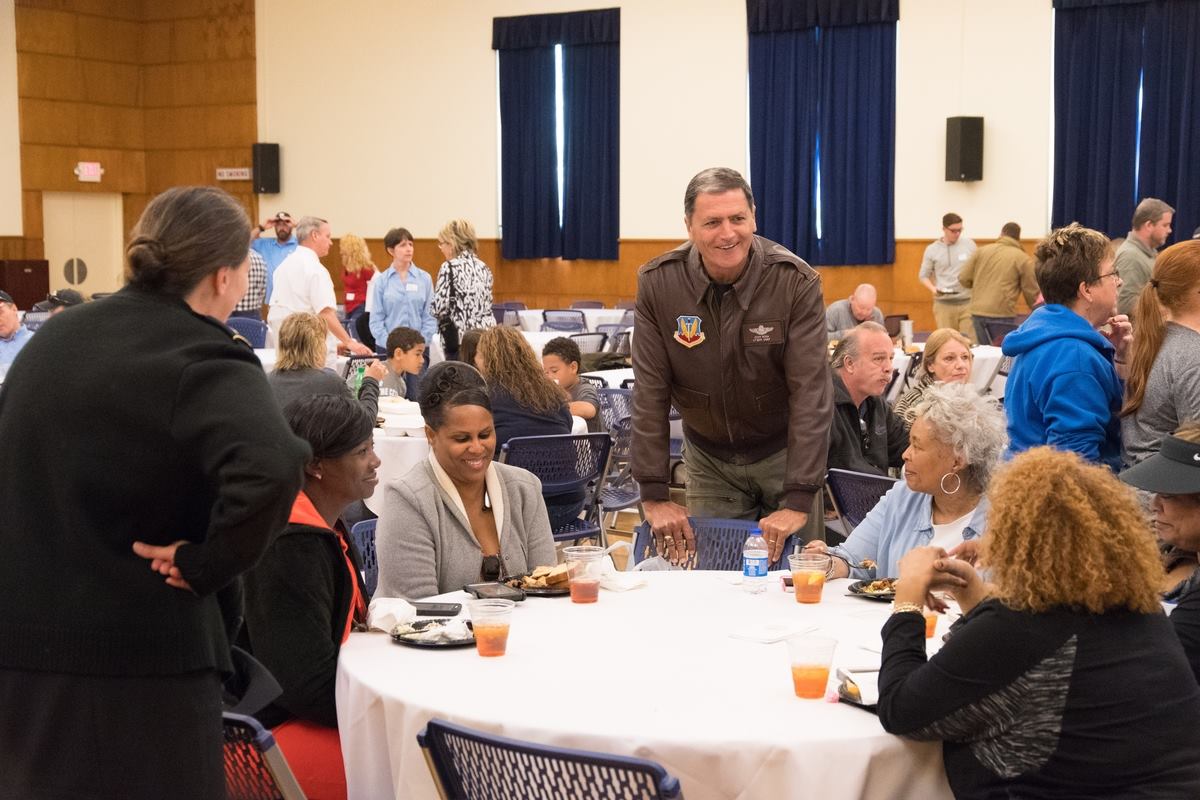
General Rosa and Provost Dr. Connie Book visit with class of 2019 family members at a lunch held last year after the gauntlet. This year boxed lunches will be available to purchase.
Cadets who saved an overnight and followed the protocol can take one Saturday night. Most of the cadets are too exhausted to want to do much Saturday night. If you want to go out for a nice meal Sunday is the better day to do that.
I’ll be helping my youngest daughter at her high school musical that weekend so I’ll have to miss the excitement. I look forward to seeing everyone’s photos. Next year I’ll have my own college freshman, just not a knob at The Citadel.
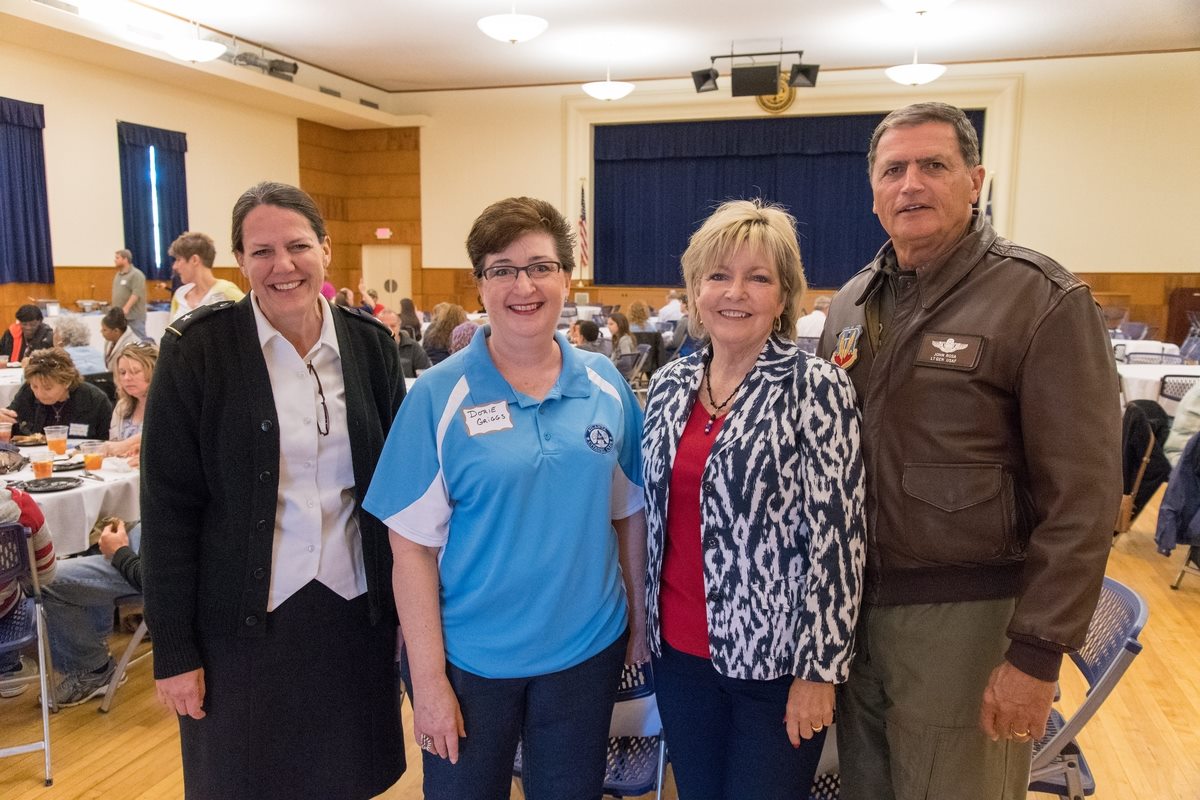
L-R Provost, Dr. Connie Book, Dorie Griggs, Mrs. Donna Rosa, General John Rosa